Showing posts with label africa art. Show all posts

Friday, April 9, 2010

Mama Africa Art Gallery

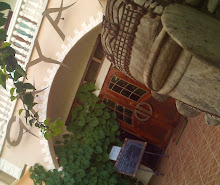
The Mama Africa Art Gallery, located in Batokunku Village, Kombo South, is run and coordinated by Isha Fofana, a renowned female Gambian artist, and her husband, Bern Axe.
 The art gallery hosted the first ever Women's Museum established in the history of The Gambia's Arts and Culture industry. The million dalasi museum was opened few months ago by Fatou Mass Jobe-Njie, the minister of Tourism and Culture, on behalf of the vice president of the Republic of The Gambia and minister of Women's Affairs, Aja Dr Isatou Njie-Saidy.

The Tourism and Culture minister was accompanied by senior government officials, Momodou Joof, the director of the National Centre for Arts and Culture (NCAC), among others. In addition, the Women's Museum hosted an International Women Arts Exhibition held from the 8th to the 16th of March 2010. This rare exhibition brought together four top women artists from the Federal Republic of Germany and a total of 22 renowned artists sent in their products for exhibition at the museum.

The Arts and Culture desk officer last week made a short visit to the Mama Africa Art Gallery and was taken on a conducted tour by the proprietor, Isha Fofana, across the length and breadth of the gallery. The most striking aspect of the tour covered the inside view of the Women's Museum, where different artifacts that got there root from centuries of our traditional norms and values could be seen hanging on the walls, hangers displayed on the floor, some products contained in special containers for preservation of the spirit of arts and culture in the country and beyond.

Another interesting site of the gallery is the workshop that is located right at the far end of the compound, where training is offered to children and other potential artists on different skills. Trees and plants of different species could also be seen scattered in the garden. These trees and plants are used for healing numerous ailments. The set up of Mama Africa depicts a pristine natural environment where virtually everything is made out of traditional and natural products such as wood.


Fine dining whenever you want to eat out in Senegambia.  
A unique Gambia restaurant for both Gambian and global cuisine.
Come and enjoy our restaurant in The Gambia!
Directions Bertil Harding Highway, next to Senegambia Craft Market 
220 4464022
220 6664022

Wednesday, November 18, 2009

Gambia And West African Folktales


Sun and Moon are married and have children together. Sun takes his children out with him during the day. This makes moon very worried because it is far too hot for the children to be out during the day.

So Moon takes it upon herself to fix this. She makes her children only come out at night with her. Of course her husband Sun is very angry by this so he chases her across the sky. He has caught her a few times thus, this is when eclipses occur.


Fine dining whenever you want to eat out in Senegambia.
A unique Gambia restaurant for both Gambian and global cuisine.
Come and enjoy our restaurant in The Gambia!


Directions Bertil Harding Highway, next to Senegambia Craft Market


220 4464022
220 6664022
gaya@qanet.gm
gayagambia@gmail.com
www.gayaartcafe.com/

Tuesday, November 10, 2009

Visit Senegal


Senegal lies between the Tropic of Cancer and the Equator and enjoys a steady warm year round climate, with a short rainy season between the months of June and September.

As such it provides the perfect weather for a lazy beach holiday, especially in the Saly region just south of Dakar; but Senegal also has three mighty rivers and these provide a good deal of fertile land and some wonderfully intricate coastal lagoons and waterways that are a joy to explore. 

And because of this abundance of water and fertility it supports a great wealth of wildlife including numerous birds from coastal waders to large raptors, and various mammal species such as warthogs, hyenas, monkeys, baboons, manatees and dolphins.

CLIMATE
Senegal has marked contrasts in climate. The coastal region, except in Casamance, is equable, with low rainfall and high humidity. Inland, the climate is drier, ranging to the semi-desert of the Sahel region in the east. The wet season is from June to September, rather shorter in the north and longer in the south, especially near the coast.

VISAS & IMMIGRATION
Citizens of countries member of the European Union (EU) do not need visa to travel to Senegal for up to three months stay. Visas are also not required for citzens of Canada Israel Japan Taiwan United States .


PEOPLE
The population was estimated in 2002 at about 9,8 millions , of which a quarter live in the agglomeration of Dakar, it is composed of many ethnics. 

The Wolofs, are the most represented (35%), they make up the majority in all the regions, especially in the centre, the north and the coast of Dakar and Saint Louis. The farmers and the merchants, of Muslim faith for the majority, there importance is certain in the nations economy. The Lebous, established in fishing communities in the peninsula of Cap-Vert and in Saint Louis are related.

 The Pulaar (20%), is composed of the Foulbes, Peuls and Toucouleurs, in the northern Senegal, the Fouta Toro, historical source for the propagation of Islam in Senegal, make up the cultural birthplace, they are very active in the commercial domain, as well as breeding and irrigated farming. they populate the Senegalese river valley and the Ferlo region. 

The Sereres (17%) are less scattered out than the other ethnic groups. They can be found in the Sine-Saloum, along the Small Coast, in the centre of countries and north-west of the Gambia. The majority are Muslim, except for those along the Small Coast. The Diolas (10%) can be found in the Casamance, but also in Gambia and the Guinea-Bissau. Oriented rather to the culture of rice, they are for the majority animist and/or Christians in the basse Casamance region (Ziguinchor, Oussouye, Cap Skiring), and musulmans in the north and east. 

Other than the main ethnic groups, we find the Mandingues of Eastern Senegal, the Soninkes very present in the east of the country and in the zones adjacent to the Mali and the Mauritania, the Bassari which live mainly by the culture of the millet and corn, of the picking and hunting, between the Guinea border and the limit of the Niokolo-Koba national park.
You may already be a fan of Senegalese music, or you may well already be a fan of Senegalese music without realising it. For a relatively small country they have produced a startling amount of fabulous music, and much that has crossed over the ‘world music’ divide into the consciousness of Western musical audiences.

Naming CeremoniesWood Carvings
These are great lively occasions that are well worth a look if you have the opportunity. This normally takes place one week after the child is born. The elders of the village gather together in the morning and name the baby whilst slaying either a chicken, goat, sheep or cow depending on the wealth of the family. Then the rest of the village is invited to join in and the party continues long into the night. There are displays of dancing and singing and collections for the new baby continue throughout the event - so we recommend that if ever invited you take along plenty of small notes.


Tabaski
Tabaski is probably the most important celebration in the Muslim calendar and is marked by a two-day public holiday. Muslims kill a ram to commemorate when Abraham was about to sacrifice his son Isaac in obedience to God.

Ramadan
This is a 30-day festival that takes place each and every year in the ninth month of the lunar calendar. During this period all physically mature and healthy Muslims are obliged to abstain from all food, drink, gum chewing and any kind of tobacco use.

Ramadan is a time for spiritual reflection, prayer, doing good deeds and spending time with family and friends. The fasting is a way of experiencing hunger and developing sympathy for the less fortunate, and learning to thank and appreciate all of God's bounties.

MUSIC
A few names for you: Youssou N’Dour, Baaba Maal, Orchestra Baobab – and these are just the artists that have made that crossover; you’ll find that music is such a presence in Senegal, and such a crucial part of the very fabric of life that it will form a soundtrack to your holiday, a soundtrack for your memories.


SENEGAL ATTRACTIONS

The Bandia Nature Reserve
Is a small but perfectly formed game reserve, situated 40 miles from Dakar near Saly and M’bour.

You can enter the reserve either in your own car or in one of the Reserve’s 4WD vehicles and hire the services of one of the skilled guides to see some typical African savannah animals: Giraffe, White Rhino, Zebra, Roan Antelope, Waterbuck, Kudu, Oryx, Impala, Cape Eland, Lord Derby Eland, Kob Antelope, West African Forest Buffalo, Wart Hog, Crocodiles, Green Vervet Monkeys and Patas Monkeys.

Dakar
Is the capital of Senegal, located on the Cape Verde Peninsula, on the country's Atlantic coast. It is Senegal's largest city. Its position, on the western edge of Africa, is an advantageous departure point for trans-Atlantic and European trade; this fact aided its growth into a major regional port.

Kermel Market
Many women go to the colourful Kermel Market to sell a variety of flowers: marigolds, zinnias and sunflowers. The flowers are primarily for western tourists. At Kermel Market, a hot spot for foreign visitors from the West and Asia, vendors have been selling their goods since the beginning of the twentieth century.

Lac Rose
Lac Rose (The Pink Lake) surrounded by dunes, is a large shallow lagoon 10 times saltier than the ocean and is renowned for its pink hue when the sun is high. The colour is due to a high concentration of minerals in the water. Senegal’s answer to the Dead Sea, you can swim here or effortlessly float on the surface. There is a small-scale salt-collecting industry on the southern side of the lake which is also worth a visit.

Marche Sandanga
The Marche Sandanga (Sandanga Market) is a labrynth of stalls selling anything from Senegalese music casettes to freshly plucked chickens. You can buy just about anything here, although don’t expect too many souvenir stalls. Colourful and vibrant cloth and clothing are a major attraction of this traditional market, drawing in many visitors.

Palais Présidential
The Palais Présidentiel (Presidential Palace) is a white building dating back to 1906 and encompassing strikingly lovely gardens. Guards in their Presidential uniforms guard the outside and pose with tourists for pictures.

Village Artisanal
One of the most popular places for buying souvenirs is the government-sponsored Village Artisanal (Village of Traditional Handicrafts), near the fishing beach of Soumbédioune. You'll find a tremendous display of wooden carvings, metal work, gold and silver jewellery, ivory, tablecloths, blankets, leather goods and clothing, but a lot of the goods are turned around very quickly and you have to search hard for good-quality pieces.

GOREE ISLAND
To the east of Dakar, about 3km offshore, is Île de Gorée, one of the earliest European settlements along this part of coast. Today it is a haven of history and peace within easy reach of Dakar via ferry which departs every two hours during the daylight.

Local Art & Crafts
You will find a variety of traditional vibrant, colourful fabrics and canvasses, together with wooden carvings and instruments on display on the island produced by local artists.

The Old Slave Trading Station
With its colonial brick-structures and sand-blown, bougainvillea-flushed alleyways, this island is a haven of tranquillity. But there's a sad background to all this calm beauty - Île de Gorée used to be an important slave trading station, and many visitors come here for traces of this tragic past. Maison des Esclaves (Slave House) is a museum dedicated to the slave era.

The Fort
The Fort stands as a reminder of the Second World War. Here visitors can see a memorial statue and the original heavy metal war guns, and view a red buoy out in the sea marking where a British ship was sunk by the guns during the war. You can find out more about the effects of the war on Gorée Island by visiting the island’s museum of history. There is also the opportunity to visit a traditional African mosque.

SAINT LOUIS
The Saint Louis region of Senegal sits just off the border with Mauritania. Famous for its cast iron bridge, put in by French colonialists in the 19th century, it is close to the Djoudj National Park, home to thousands of birds, some indigenous to the area. The city is also famed for its culinary roots, being the home to Senegal's national dish: Ceb-u-djen - rice and fish.

The Governor’s Palace
The Governor’s Palace is an 18th century fort, and now a government building. Place Faidherbe, with its statue of the famous French colonial governor, sits in front of the Governor’s Palace.

Guet N’Dar Fishing Village
In the fishing part of the town, Guet N’Dar, pirogues are lined up on the beach and fish dry on racks by the side of the road. Women boil up fish in vast drums, and the steam mixes odorously with the early morning sea mist. A little further south is the Muslim cemetery, where each fisherman’s grave is covered with a fishing net.

Réserve de Faune de Guembeul
This reserve is small, accessible and easy to explore by foot. It’s about 8 miles south of St Louis. The landscape is a mixture of lagoons, mud flats and dry woodland protecting the population of endangered Sahel animals, which include Dama Gazelles, Patas Monkeys and Sulcata Tortoises. There are also many birds around the lagoon – 190 species have been spotted here – and there are plans to introduce other Sahel mammals into the reserve.


Ebony is an exceptionally hard and beautiful wood found only in the Sahara desert regions of Africa. Its exceptional density makes it not only very heavy, but also gives it an incomparable sheen when polished. West Africa is home to many master carvers of ebony. 

Fine dining whenever you want to eat out in Senegambia.

A unique Gambia restaurant for both Gambian and global cuisine.
Come and enjoy our restaurant in The Gambia!
Directions Bertil Harding Highway, next to Senegambia Craft Market
220 4464022
220 6664022

Friday, October 30, 2009

Contemporary Gambian Art


Lemonfish Art gallery is hosting exhibitions on Contemporary African Art, painting, sculpture and objects.

The first exhibition featured 28 artists from West Africa. Contacts have been made to work with artists and institutions in other African countries and in Europe.

We intend to run workshops for students and artists that include video and media presentations to provide inspiration and broaden views.

Special holiday workshops for guests are also available.

We hope to contribute to the cultural understanding of our visitors by giving them the chance to appreciate original works of art in undisturbed surroundings and engage in dialogue with local artists.

We are looking forward to receiving you here and sharing ideas with you.

Fine dining whenever you want to eat out in Senegambia.  
A unique Gambia restaurant for both Gambian and global cuisine.
Come and enjoy our restaurant in The Gambia!

Directions Bertil Harding Highway, next to Senegambia Craft Market
220 4464022
220 6664022
gaya@qanet.gm
gayagambia@gmail.com
www.gayaartcafe.com/

Saturday, October 3, 2009

Gaya Cafe Art Review


The art scene in The Gambia is vibrant, colourful and always fascinating, there is a wide pool of artists representing different disciplines, here are a taste of Gambia's creative talent.


A Gambian painter working with plastic art, oil and canvas.


Original Gambian batik and tie dye work by one of the leading proponents of this African craft.


Enjoys depicting his surroundings with elements important to his culture such as cowry shells, sand, and pigments that he creates from tree bark and plants.


Paintings, sculptures and art made in Gambia by Pepe Gomà. Son of Torrelameu. 


Momodou describes his artwork as an exploration of images that inculcate a system of values that are consistent with his culture and heritage. His objective is to take the viewer on a spiritrual odyssey that suggests unseen dimensions.


A locally based artist living in Bakau.

Fine dining whenever you want to eat out in Senegambia.
A unique Gambia restaurant for both Gambian and global cuisine.
Come and enjoy our restaurant in The Gambia!
Directions Bertil Harding Highway, next to Senegambia Craft Market
220 4464022
220 6664022

Tuesday, September 29, 2009

African Gifts


We have many smaller gift items: beautiful scented candels, napkin holders,incense gift sets, picture frames and much more.
We will wrap your gift beautifully for that special person in your life.

Fine dining whenever you want to eat out in Senegambia.

A unique Gambia restaurant for both Gambian and global cuisine.
Come and enjoy our restaurant in The Gambia!
Directions Bertil Harding Highway, next to Senegambia Craft Market
220 4464022
220 6664022
gaya@qanet.gm
gayagambia@gmail.com
www.gayaartcafe.com/

Sunday, September 27, 2009

Gambia Artist Momodou Ceesay


Momodou describes his artwork as an exploration of images that inculcate a system of values that are consistent with his culture and heritage. His objective is to take the viewer on a spiritrual odyssey that suggests unseen dimensions.

ON MY KNEES BEFORE THESE MIGHTY HEAVENS
It is seldom in the world of words, and in the world of visual art that the two distinct expressions of creativity are combined to put forth a powerful and moving story; a story of an African man's spiritual journey, a poetic odyssey called "On My Knees Before These Mighty Heavens"

In 1990 Momodou spent some time in New York creating designs for a greeting card company called Heritage Collections. During this period he worked with the homeless and visited the Bowery Mission often. He was inspired from this experience to write this epic poem.

 The work uses excerpts from Hebrew Scripture and the Koran to describe the searching of a better life for African and African American people. Momodou Ceesay adds to the virtual reality of the story line by delineating the poem with 36 of his original paintings. Some of these paintings for the book were executed during his stay as an artist-in-residence at the Center for the Arts and Religion, Wesley Theological Seminary in Washington, DC.


In this book, the protagonist, Issa Kujabi, in righteous indignation, seeks an audience with God, in order to lament about the condition of his people. The book speaks of social injustice, the coldheartedness of the ruling elite in Africa; the phenomena of Africa's current demise, all done with poetry and art.


 "Through a dialogue, the poem begins with the particular destruction, genocide and suffering of African people and of their descendants in the diaspora. The scope is then widened to include the negative forces that seem to grip the planet as a whole. It moves from despair to vision as the dialogue progresses, endingg with a revelation giving reasons for suffering, and what the future holds for Africa and the world as a whole"


Fine dining whenever you want to eat out in Senegambia.  
A unique Gambia restaurant for both Gambian and global cuisine.
Come and enjoy our restaurant in The Gambia!
Directions Bertil Harding Highway, next to Senegambia Craft Market
220 4464022
220 6664022

Friday, September 18, 2009

Gambian Artist Njogu Touray


 In Trace of Old one is confronted with the monumentality of the ruins of the palace of Timbuktu. In the foreground the boulders are symbols of silent witness; the sky and sun testament to the unforgiving heat of the desert.


Seeing Beyond relates to the magnificence of the grand baobab tree also bearing silent witness but harboring a diviner at its core. This revered sage is symbolized by the all seeing eye, an important talisman in the Moslem faith, and cowry shells. Not only are cowries symbols of economic value, but they are used by the healer to read the future and divine the path a follower should take. In both paintings one feels the harshness of the terrain through Njogu’s use of natural colors. Touray lives and works in Banjul, The Gambia.

Fine dining whenever you want to eat out in Senegambia.
A unique Gambia restaurant for both Gambian and global cuisine.
Come and enjoy our restaurant in The Gambia!
Directions Bertil Harding Highway, next to Senegambia Craft Market
220 4464022
220 6664022

Monday, September 14, 2009

Gambia Artist Buba Drammeh

Buba Drammeh is a talented batik artist from The Gambia. His batiks have been incorporated in the design for the CD "Mansalou", featuring the kora playing and singing of Jali Sherrifo Konteh.

Batik is a way of decorating cloth by covering part of it with a coat of wax and then dyeing the cloth. This process is usually repeated several times, using different dyes, until the final effect is achieved. The waxed area keeps its original colour and when the wax is removed the contrast between the dyed and undyed areas makes the pattern. During the dyeing the brittle nature of the dried wax will cause it to crack, allowing small quantities of dye to penetrate to the cloth. The resulting spider-web pattern adds an unplanned and interesting effect to any design and is a special characteristic of most batik work.

Buba normally buys his cloth, which is usually white or a very light colour, from the town of Serrakunda. He buys whatever amount of cloth he can afford, together with the dyes, salt, caustic soda and wax crayons.


Then he cuts the cloth according to the size of the pattern he has decided to draw. He spreads the cloth flat and draws straight onto the cloth (which is always 100% cotton) using a crayon which is not the same colour as the first dye. If the same colour were to be used the pattern would not been seen when it came out of the dye


He then melts the candle wax and uses a small stick with wire wrapped round it, called a tjanting, to dip in the wax. The wire will hold the wax and will permeate and seal the parts of the cloth it covers so that the dye cannot penetrate. He paints the melted wax onto the parts of the cloth he wants to remain white.

Next he prepares the dye-bath, mixing the salt and caustic soda with the dye powder, using gloves to protect his hands from the caustic soda. The soda and salt helps to fix the colour to the cloth. The first colour will be the lightest colour he wants to use. He then puts the material to dry but has to take care not to leave it in the hot sun for too long as it could melt the wax!


When the cloth is dry the wax is melted again and those areas that are to retain the colour just dyed are covered with wax, and the material is dipped into a dye of a colour darker in tone than the first. This process continues until the darkest shade (black) has been reached. There are usually five or six colours in the final batik, including the original white of the material and the final black. Since the colours are superimposed in the dyeing process, a particular colour-scale must be planned. For example, if the first colour was blue, then yellow could be used for the second dye and that would make green, or red to make brown.

Finally Buba buys firewood and builds a small fire to boil water, soap and salt together in a big container and the boiling water will take the wax out of the cloth. Then it is washed and ironed. The ironing will remove any final small particles of wax from the material. He has no electricity so the iron is a flat iron that holds heated charcoal in the top.


Buba syeas he gets the ideas for his designs from he said that he likes to promote the traditional African way of life. Things that his forefathers would also have done, such as hunting, fishing and pounding (rice and other grains), and also scenes of life in a compound or traditional musicians such as a kora , balafon or djembe player. He has also heard stories from his mother and grandmother, perhaps about an animal, and he will draw that, so, as he says, "Children can come and say, oh, look these animals are existing in The Gambia." He also gets ideas and colour schemes just by "looking at what is around me". This of course, includes the Baobab tree, which can live for hundreds of years, and is a very important tree in The Gambia. People depend on it for food and for cures and many believe it has magical properties.

Buba Drammeh was born at Nuimi Nemakunku village, in the Upper Nuimi district on North Bank. His father's name was Saikou Ba Drammeh, who was a hunter. He died very early but Buba has been told that he was a hunter of crocodiles and other creatures. His mother's name is Jankang Nass, now married again and living in Nuimi Lamin where Buba now lives with his wife, three children, adopted nephew, parents, sisters and other friends. There is a large and very productive vegetable garden which is run as a co-operative by all the hard-working women.


Fine dining whenever you want to eat out in Senegambia.  
A unique Gambia restaurant for both Gambian and global cuisine.
Come and enjoy our restaurant in The Gambia!
Directions Bertil Harding Highway, next to Senegambia Craft Market
220 4464022
220 6664022

Friday, September 11, 2009

Gambia Artist Papa Alassane Gueye

I call myself a visual plastic artist, painting with oil and canvas. I have a good imagination, creating interpretations of contemporary Africa as my living. This Papa Alassane Gueye surrealist is a thought outside of the real life.


Fine dining whenever you want to eat out in Senegambia.  
A unique Gambia restaurant for both Gambian and global cuisine.
Come and enjoy our restaurant in The Gambia!
Directions Bertil Harding Highway, next to Senegambia Craft Market
220 4464022
220 6664022
gaya@qanet.gm
gayagambia@gmail.com
http://www.gayaartcafe.com/